
What students can learn from the Canterbury Tales stories

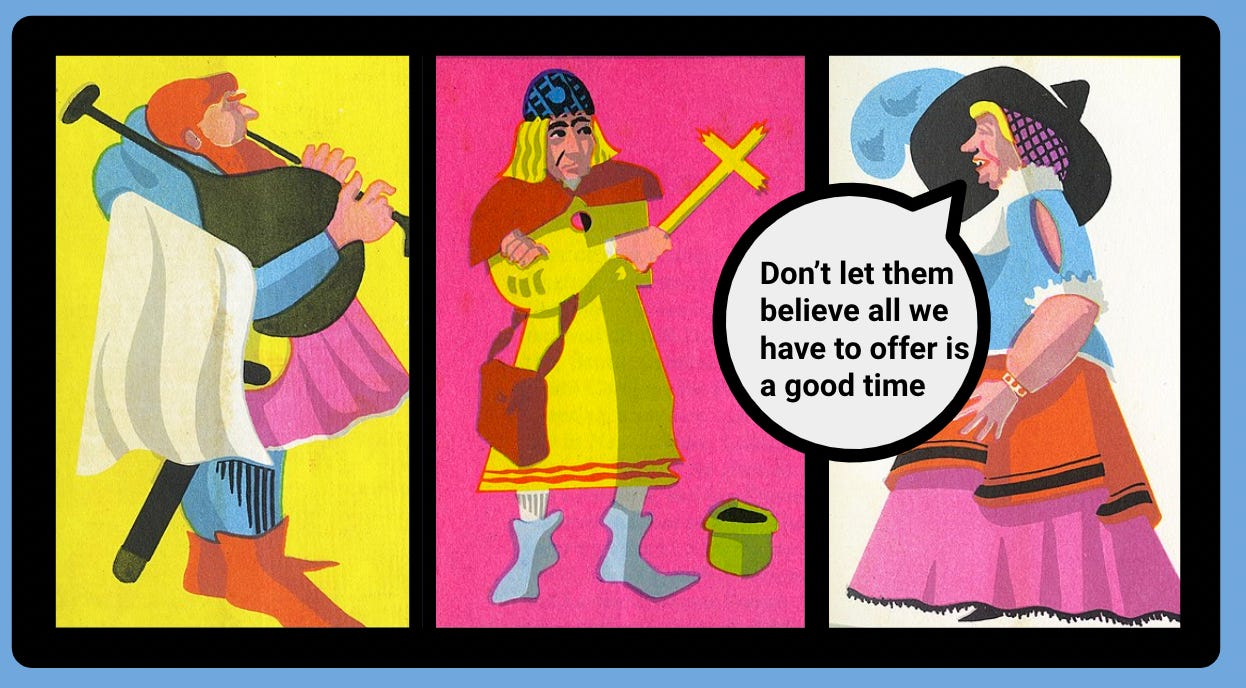
Back in 1300-something, Geoffrey Chaucer wasn’t sitting with the tip of his quill pen in his mouth thinking, “I want to make life easy for the English teachers of the future. I’m going to write stories that lend themselves to assignments about the development of theme, characters, and symbols.” Instead, we can say with a lot of confidence that he wrote the tales to be entertaining above all. Eventually, Canterbury Tales earned its place in the literary canon because there’s more to it than just jokes: artful couplets that describe humanity with nuance, a historically significant group of characters, and a variety of story genres. Literature lovers can easily delight Chaucer’s genius, but it’s another matter to convince classes of high school students that his stories have a purpose.
For high school juniors and seniors, reading stories just for the sake of reading feels like busywork. My students were always a bit bored when they were simply answering plot-based questions about the three tales we covered, but they were more engaged when I used the stories to help them strengthen reading and thinking skills that they could apply elsewhere.
So here are some ideas about what I think makes “The Miller’s Tale,” “The Pardoner’s Tale,” and “The Wife of Bath’s Tale” more “teachable.”
“The Miller’s Tale”
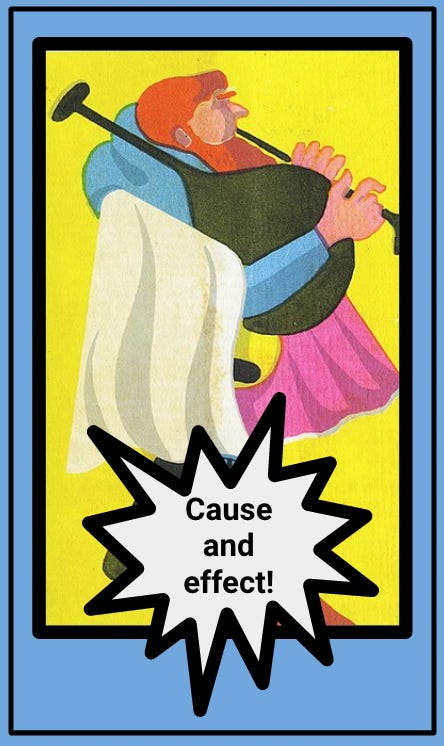
So much happens in this bawdy story about three men who want to be with the beautiful young woman Alison that it’s easy to lose track of why it happens. It helps to give students questions that prime them to be on the lookout for the results of events that seem unimportant at first. Here’s how my worksheet gets students set up for tracking the cause-and-effect relationships:
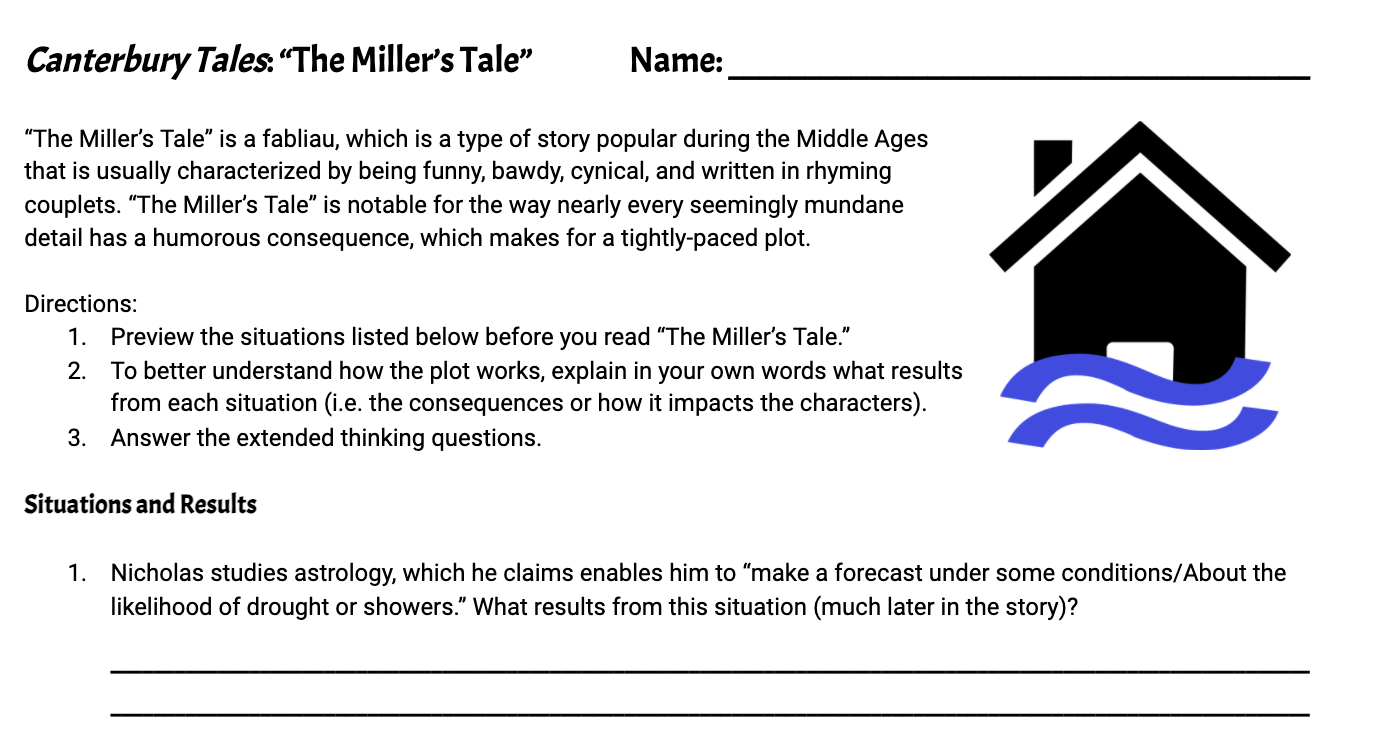
“The Miller’s Tale” also includes opportunities to emphasize dramatic and situational irony. But I think it shines best as an example of how writing is most impressive when one thing leads to another.
Related resource:
The Miller's Tale Resources
Includes cause-and-effect questions to study the plot and a multiple-choice quiz
“The Pardoner’s Tale”
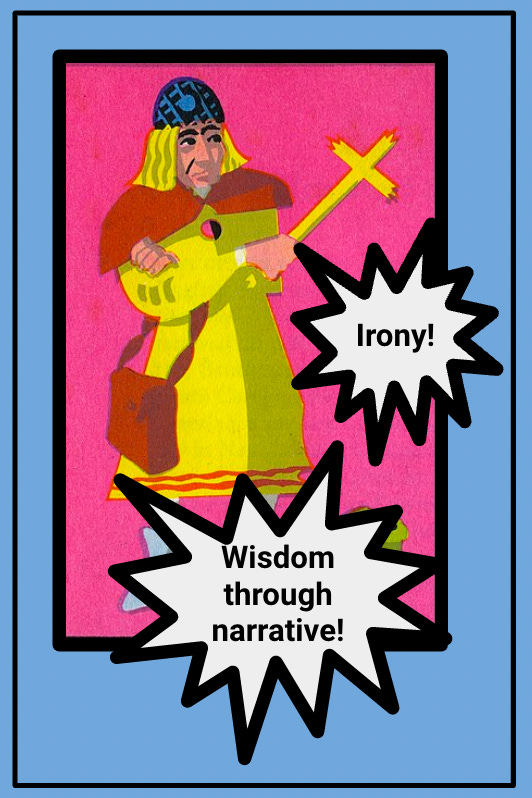
“The Pardoner’s Tale” is best known for the way it’s loaded with verbal, situational, and dramatic irony. Identifying examples that align with each type of irony is fun for a little while, but it doesn’t really culminate in a big takeaway for students. I’ve found that this story becomes more memorable when we look at it as an example of how a narrative can be the best way to get a message across. We tend to be more receptive to learning about good and bad ways to be in the world when wisdom comes through cleverly worded, well-plotted stories rather than finger-pointing lectures.
Students are engaged and exercise their brainpower a bit when they extract the multiple points of advice that seem to be implied by “The Pardoner’s Tale.” Depending on the group and time available, I’ve extended that thinking with a creative writing assignment that requires students to write an entertaining, non-preachy exemplum based on an assigned proverb (e.g. “Don’t bite off more than you can chew,” “Don’t count your chickens before they’re hatched,” etc.). It’s a challenge, but I’ve always been impressed by the stories students have come up with.
Related resource:
The Pardoner's Tale Resources
Includes plot questions with table for examples of irony, a multiple-choice quiz, and an exemplum creative writing assignment
“The Wife of Bath’s Tale”
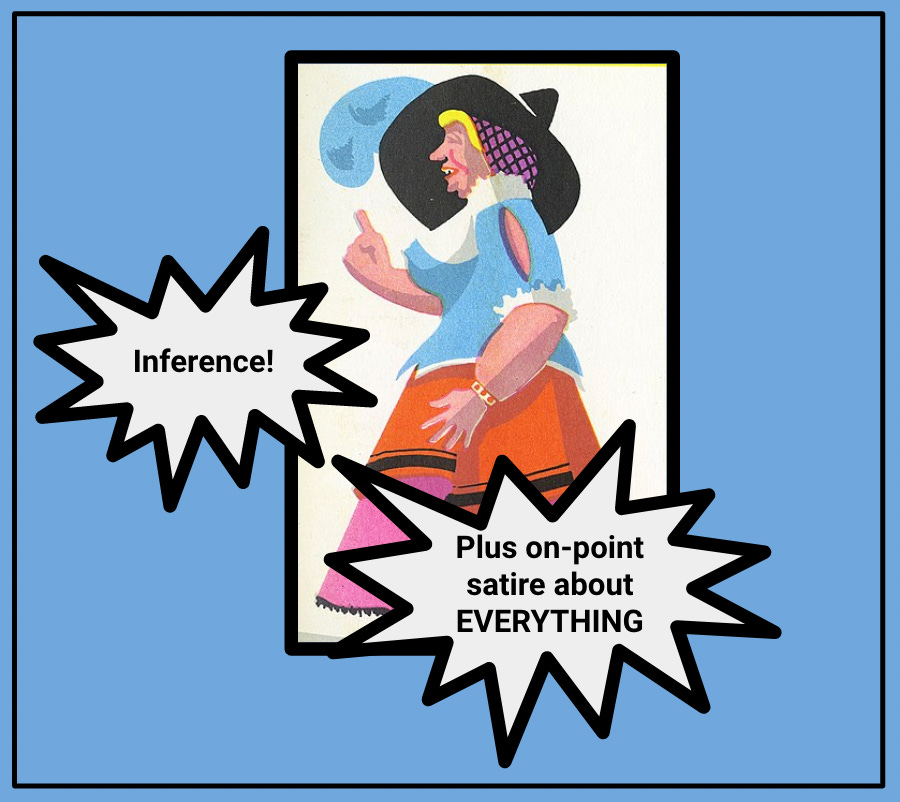
When you first page through “The Wife of Bath’s Tale,” the thing that stands out is how the Wife of Bath’s prologue to her tale is longer than the tale itself. Her opinionated prologue underscores how she’s a spirited woman who’s lived a colorful life and is unusually independent for her time period. She’s an interesting character, but students usually lose interest in her rambling intro, so I moved away from basic comprehension questions about that section. In fact, I think students get more out of the Wife of Bath’s prologue when they don’t read it word for word.
Because the Wife of Bath’s prologue is so long and hard to follow, I provide an outline that organizes the material into the points of her biography, her thoughts on women’s rights, and her observations of the problems men and women typically seem to have when they’re married to each other. This saves a lot of reading time.
I think a better approach to this section is to use it as an exercise in making inferences—or, in other words, getting students to come to conclusions based on evidence in the text. My resource requires students to identify which personality traits we can attribute to the Wife of Bath based on what they infer directly from excerpts provided from her prologue. I even provide the checklist of personality traits for students to choose from. Even with this scaffolding, it’s still a challenging assignment, and it makes the text more useful. Students are reminded that when something is uncertain, we need to use evidence as best as we can to form judgments.
So when you save some time on reading the prologue, students will still have the attention span to read the actual tale and analyze how this satirical chivalric romance takes on church corruption, antifeminism, and social inequality.
Related resource:
The Wife of Bath's Tale Resources
Includes outline of prologue, inference exercise, reading questions for the tale, and a multiple-choice quiz
In conclusion
You can do more than just basic reading questions with the Canterbury Tales tales (ha)! High school students get bored quickly with reading stories simply to follow the plot, so it’s important to highlight thematic takeaways if possible, and also try to find opportunities to teach thinking skills or concepts that can be applied to other texts and areas of life. Chaucer certainly wrote Canterbury Tales to entertain, but since it’s made its way into English class, it needs to do more than that. And it can! You can use these stories to strengthen students’ understanding of cause-and-effect relationships, how wisdom is conveyed through narratives, and what it means to make inferences.
Check out my Canterbury Tales Story Bundle for resources that will help you make the most out of “The Miller’s Tale,” “The Pardoner’s Tale,” and “The Wife of Bath’s Tale”!
